


Blog
Men’s Diamond Wedding Bands: Styles, Metals, Carat Weight and How to Choose

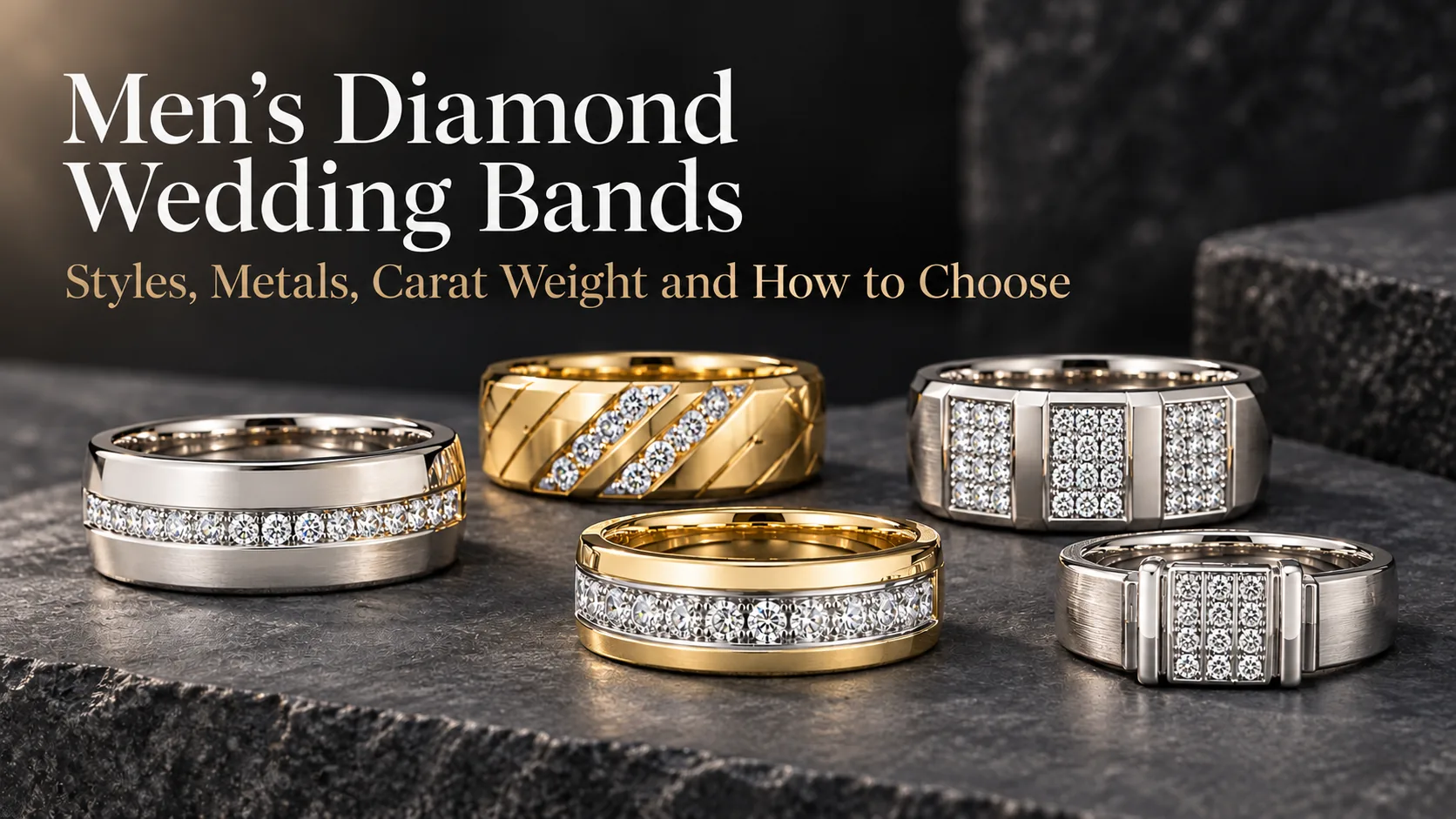
Men’s Jewelry Guide · Updated September 2026
A men’s diamond wedding band is usually bought to be worn every day, so the right one has to balance appearance with a setting that fits your routine. Men’s diamond wedding bands run from a single line of small stones to wide, multi-row designs. This guide walks through the styles, metals and carat weights that matter, using real examples from our men’s collection so you can see what each option looks like and what it costs.
Styles of men’s diamond wedding bands
Most of the difference between one men’s diamond band and another comes down to how the diamonds are arranged and set. The setting affects how much diamond shows across the band, how smooth the surface feels and how protected the stones are during daily wear.
Single-row bands
One line of diamonds across the top of the band. It is an understated way to add diamonds: clean, classic and easy to wear with a watch or on a hand that works. In our collection, single-row bands start at $3,360.
Double-row and multi-row bands
Two or three rows of diamonds side by side make a wider, bolder band with a lot more sparkle across the finger. They suit men who want the ring to be noticed. Double-row bands start at $3,150, and multi-row designs start at $3,360.
Channel-set bands
In a channel setting, the diamonds sit in a groove between two walls of metal, with no exposed prongs above the stones. That creates a smoother surface while the metal walls help protect the edges of the diamonds. Channel-set bands start at $4,410.
Pavé bands
Pavé (pronounced “pah-vay”) uses many small diamonds set close together with tiny beads of metal, creating a continuous surface of sparkle without relying on a few larger stones. The trade-off is lots of small settings, so it’s worth having the band checked now and then. Pavé designs start at $3,780.
Eternity bands
An eternity band has diamonds all the way around. It sparkles from every angle, but because there is no plain metal at the back, an eternity band can be difficult or sometimes impossible to resize, depending on the construction, so getting the size right matters more. Eternity styles start at $3,360.
Baguette and round, three-stone and two-tone designs
Rectangular baguette diamonds mixed with round diamonds give a structured, architectural look (from $3,570). Three-stone and station bands space a few larger diamonds around the band (from $3,780). Two-tone bands combine yellow and white gold for contrast (from $5,040).
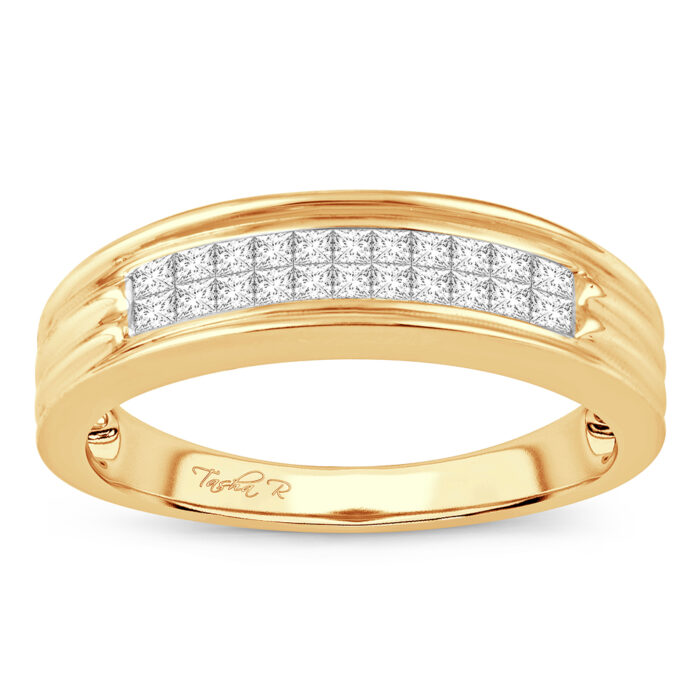 Wide double-row band1/2 ct natural diamonds, 14K yellow gold
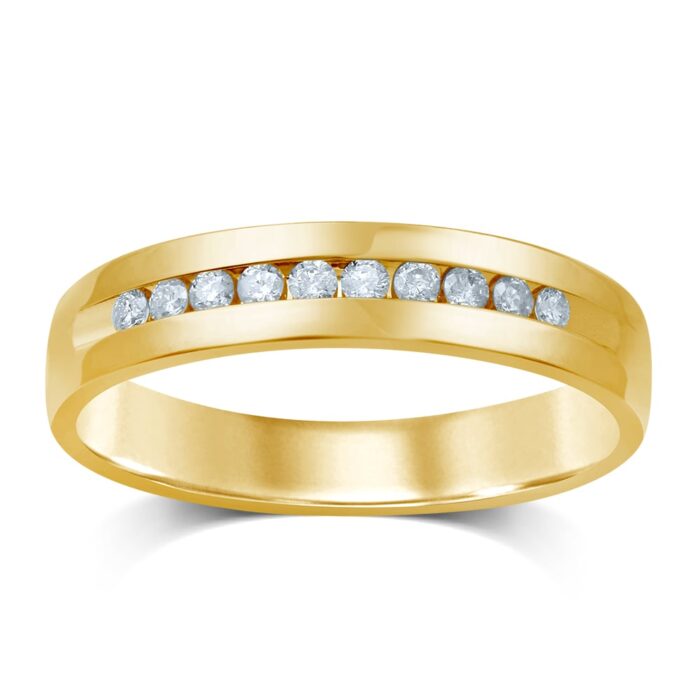 Slim single-row band1/4 ct natural diamonds, 14K yellow gold
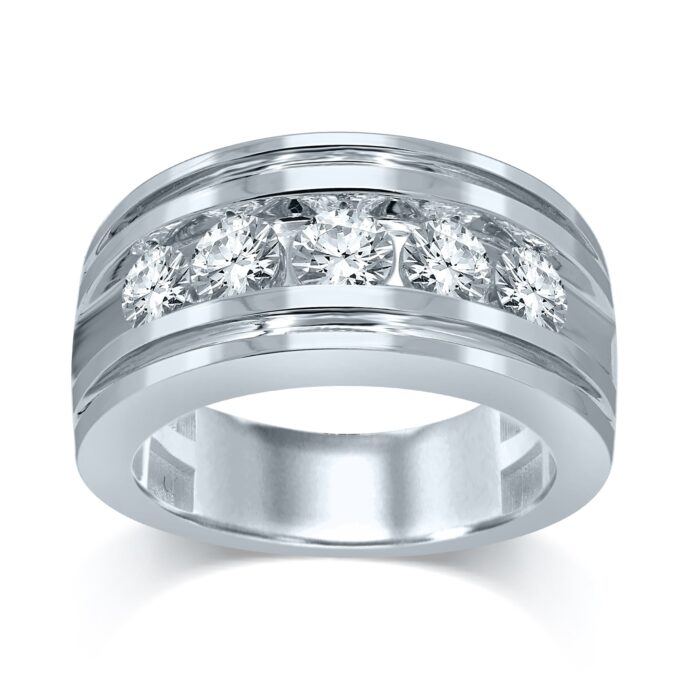 Five-stone channel band2 ct lab-grown diamonds, 14K white gold
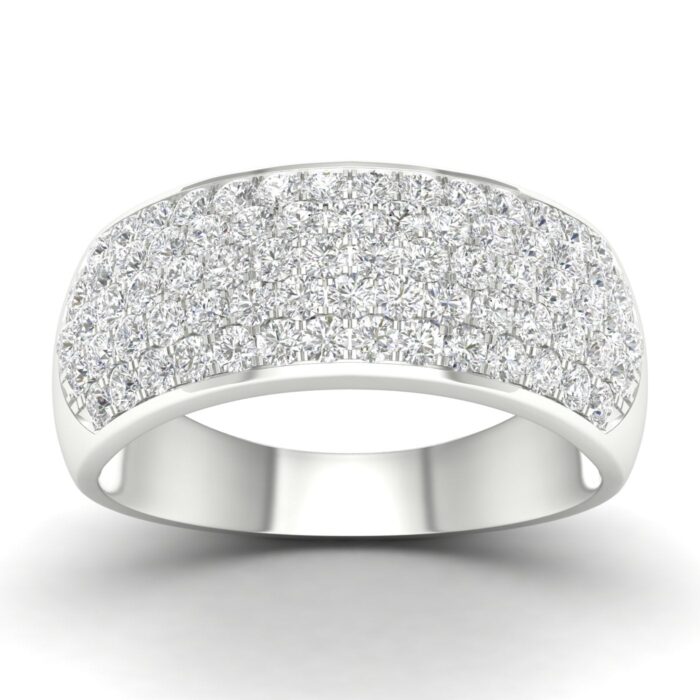 Pavé dome band1 ct lab-grown diamonds, 14K white gold
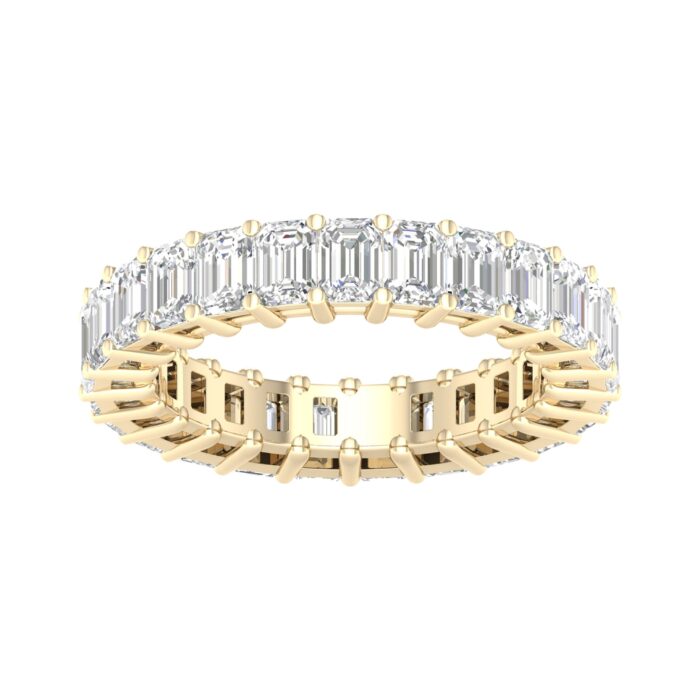 Baguette and round eternity5 ct lab-grown diamonds, 14K yellow gold
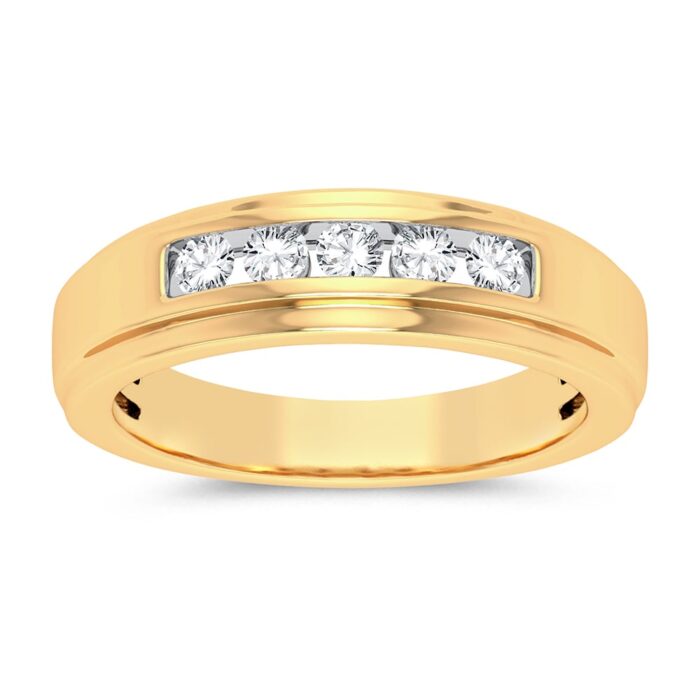 Two-tone band1/2 ct natural diamonds, 14K gold
Prices listed as “from” reflect our men’s collection at the time of writing and can change.
10K vs 14K gold, yellow vs white
The number before the K tells you how much pure gold is in the metal: a 14K piece is 14 parts gold to 10 parts other metals, as the FTC explains for gold jewelry. 14K gold is 58.3% pure gold; 10K gold is 41.7% pure gold, with the rest made up of stronger alloy metals. Both are real, solid gold. The choice comes down to color, durability and price.
| 10K gold | 14K gold | |
|---|---|---|
| Gold content | 41.7% pure gold | 58.3% pure gold |
| Yellow gold color | Slightly paler yellow | Richer, warmer yellow |
| Hardness | Harder than 14K in typical jewelry alloys | A little softer, still made for daily wear |
| Price | Lower | Higher |
| Why choose it | Lower price and higher gold-alloy hardness | Higher gold content and richer gold color |
Yellow or white? Yellow gold is the traditional wedding band look and warms up against the skin. White gold has a bright, modern finish that makes diamonds look especially crisp. White gold gets its bright finish from a rhodium plating, which can wear over the years and be re-plated by a jeweler to bring the shine back. Two-tone bands give you both.
Most of our men’s bands come in 14K white or 14K yellow gold, with a smaller selection in 10K.
Carat weight: what the number means and what it costs
On a band, the carat weight is the total weight of all the diamonds together, often written “ct t.w.” (carat total weight). A 1 ct band might hold a dozen small diamonds or a few larger ones, so two bands with the same carat weight can look very different. The setting and the size of each stone matter as much as the total.
For a sense of scale: around 1/4 ct reads as a subtle line of sparkle, 1/2 to 1 ct is a noticeable diamond band, and 2 ct and up is a statement piece.
| Total carat weight | Natural diamonds | Lab-grown diamonds |
|---|---|---|
| Up to 1/4 ct | From $2,100 · typically about $3,360 | — |
| About 1/2 ct | From $1,890 · typically about $5,670 | From $3,990 |
| About 1 ct | From $5,880 · typically about $8,820 | From $3,990 · typically about $4,410 |
| 1 to 2 ct | From $8,400 · typically about $12,810 | From $2,940 · typically about $6,720 |
| 2 to 4 ct | — | From $3,360 · typically about $7,560 |
| 4 ct and up | — | From $5,040 · typically about $10,080 |
Based on the men’s bands and rings in our collection at the time of writing. “Typically” is the middle price in each group. Style, metal and setting also affect price.
Natural vs lab-grown diamonds in a men’s band
Lab-grown diamonds are real diamonds. According to the GIA, a laboratory-grown diamond has essentially the same chemical, physical and optical properties as a natural one; the difference is that it is grown in a lab instead of formed underground.
The practical difference is price. In our collection, a band with about 1 carat of natural diamonds typically costs about $8,820, while a band with about 1 carat of lab-grown diamonds typically costs about $4,410. That price difference can make larger carat weights more attainable with lab-grown diamonds.
Natural diamonds appeal to buyers who value rarity and the tradition of a mined stone. Neither is the “right” answer. If you’re weighing the two, our guides to lab-grown vs natural diamonds and whether natural diamonds are worth it go deeper.
Width, fit and comfort
Men’s bands in the 5 to 8 mm range give you a useful reference point when comparing widths. A slim single-row band keeps things low-key; a wide double-row or multi-row band makes more of a statement.
Pay attention to the inside of the band, too. A “comfort fit” band has a rounded inner edge that slides over the knuckle more easily and feels smoother through the day. A flat inside is more traditional. If you have never worn a ring, a comfort-style interior and a moderate width are the easiest place to start.
Getting the size right
A few tips help you land on the right size:
- Measure at the end of the day, when fingers are at their largest, and not when your hands are cold.
- The ring should slide over the knuckle with a little resistance and not spin freely.
- Wider bands can fit more snugly than thin ones, so size your finger using a band or sizer close to the width you plan to buy.
- Confirm your size before choosing an eternity band, since resizing one can be difficult or impossible.
Caring for a diamond band you wear every day
- Clean it with warm water, a little mild dish soap and a soft toothbrush, then rinse and dry.
- Take it off for heavy lifting, gym work and jobs where your hands take a beating.
- Check the diamonds now and then, especially on pavé bands, and have a jeweler tighten any stone that feels loose.
- If you choose white gold, plan on an occasional re-plating to keep it bright.
Quick checklist before you buy
- How you use your hands: active work favors channel-set or single-row bands and 10K gold.
- Look: slim and subtle, or wide and bold?
- Metal: yellow, white or two-tone; 10K or 14K.
- Diamonds: natural or lab-grown, and your target carat weight.
- Size and width: confirmed, especially for eternity bands.
Find your band
Browse 81 men’s diamond bands, plus 86 men’s diamond rings, in 10K and 14K gold, in natural and lab-grown diamonds. Shipping is free on every U.S. order.
Frequently asked questions
Which men’s diamond wedding band styles work well for everyday wear?
Channel-set and single-row bands can be good options for everyday wear because the diamonds can sit relatively low and the designs tend to have fewer raised details. Double-row, multi-row and pavé bands put more diamonds across the top of the ring but may have more individual settings to inspect over time.
Is 10K or 14K gold better for a men’s wedding band?
14K gold contains more pure gold at 58.3%, compared with 41.7% in 10K gold. In yellow gold, 14K generally has a richer gold color, while 10K is typically harder in common jewelry alloys and costs less. Both are solid gold and are commonly used for wedding bands.
How many carats should a men’s diamond wedding band be?
It depends on the look you want. About 1/4 carat total weight reads as subtle, 1/2 to 1 carat is a clearly visible diamond band, and 2 carats and up is a statement piece. In our collection, most natural diamond bands fall between about 1/4 and 1 carat, while lab-grown bands commonly run from 1 to 5 carats.
Are lab-grown diamonds real diamonds?
Yes. Lab-grown diamonds have the same chemical makeup, hardness and sparkle as natural diamonds. They are grown in a lab rather than mined, and they typically cost less for the same carat weight.
Can a diamond eternity band be resized?
It can be. Because diamonds go all the way around, there is no plain metal to cut and adjust. Depending on the construction, resizing can be difficult or impossible, so confirm your size before choosing an eternity band.
How much does a men’s diamond wedding band cost?
In our men’s collection, diamond bands start at $1,890 and go up to about $14,700. Price depends mostly on carat weight, whether the diamonds are natural or lab-grown, and the metal.
Is shipping free?
Yes. Shipping is free on every order within the United States. Estimated delivery time is 2 to 6 weeks, depending on the product.