


Diamond education · Monetary Jewelers
Know exactly what you're buying.
Most diamond guides explain the 4Cs and stop there. This one tells you which of them actually change how a diamond looks, which ones you can quietly save money on, and what any of it costs per month.
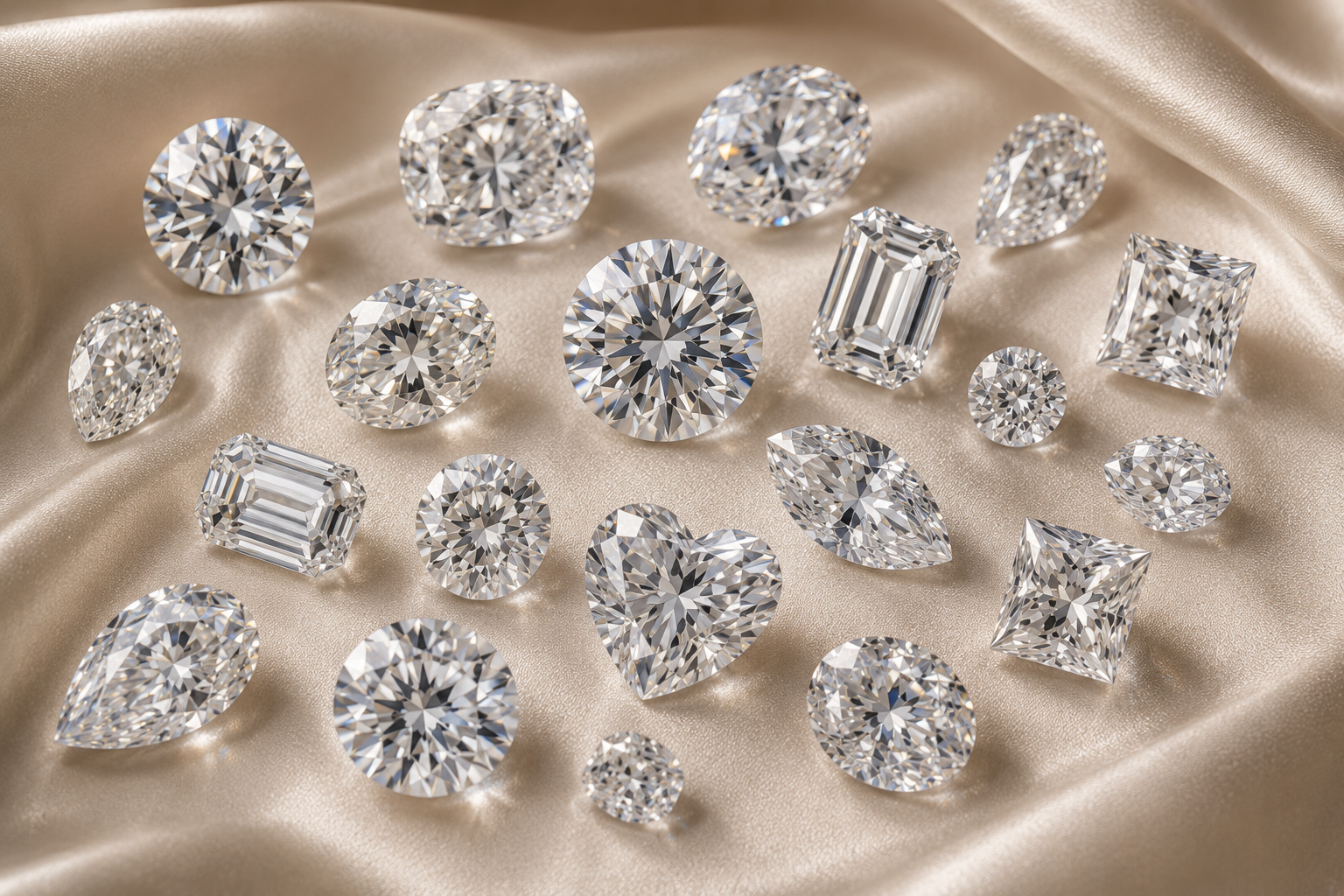
Lab-grown or Natural?
A lab-grown diamond is a diamond. Not a simulant, not cubic zirconia, not moissanite — the same carbon crystal structure, the same hardness, the same refractive index. Put a lab-grown and a mined diamond side by side and no jeweler can tell them apart by eye. Distinguishing them requires specialist equipment that reads growth patterns and trace elements.
Lab-grown diamonds cost a fraction of a mined stone of the same size and quality, which means the same budget buys a noticeably bigger, cleaner, whiter diamond. Natural diamonds carry a rarity and a billion-year history that some buyers want and are willing to pay for. Neither choice is wrong, and both will outlast you.
Read the full comparison: lab-grown vs natural diamonds → — price gaps, resale value, sustainability, and how certification tells them apart.
The 4Cs, ranked by how much they actually matter
The 4Cs are cut, color, clarity, and carat. They're usually presented as four equal pillars. They aren't equal — not for how a diamond looks, and not for what it costs. Here's the honest ranking.
Cut
This is the one
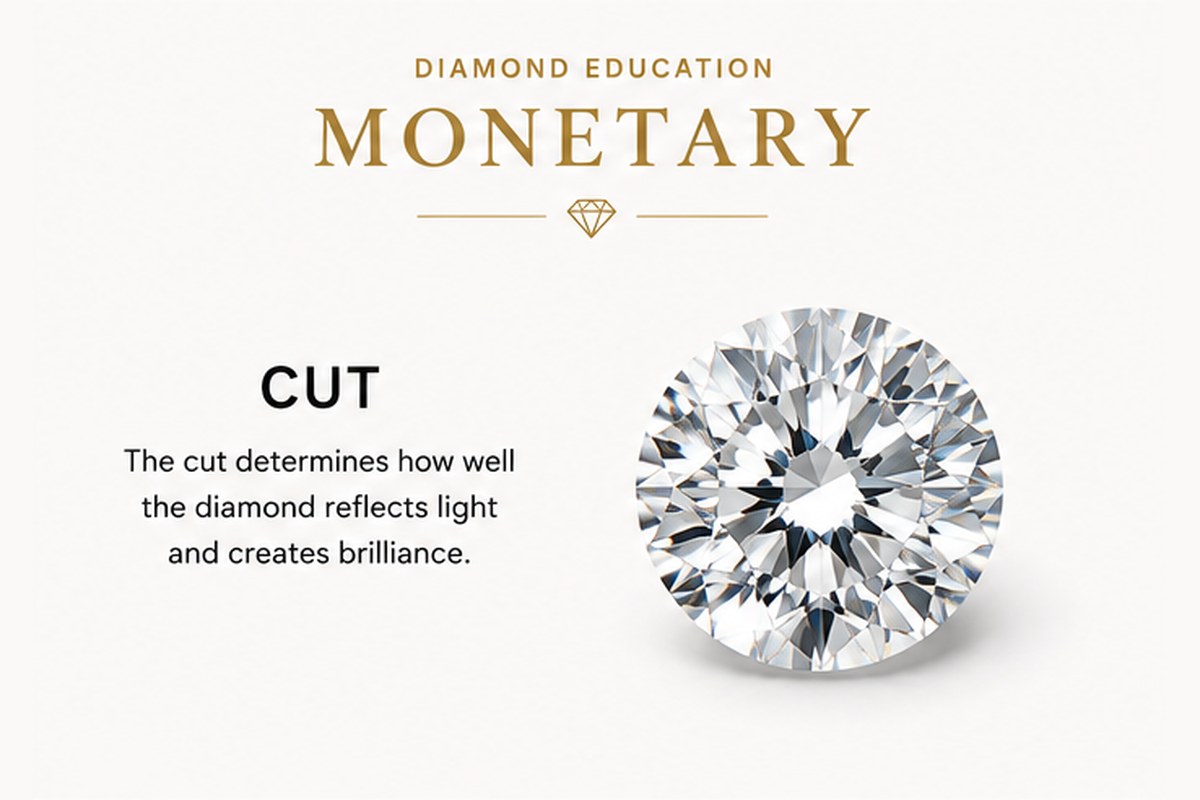
Cut is not the shape. Cut is how well the stone's proportions, symmetry, and polish handle light. A well-cut diamond gathers light and throws it back at you; a poorly cut one leaks it out of the bottom and looks dull no matter how big or colorless it is.
For round diamonds, cut is graded Excellent through Poor. Stay at Very Good or Excellent. This is the single place where spending more visibly changes the diamond. Two stones of identical carat, color, and clarity can look completely different because of cut, and the better-cut one wins every time.
Carat
Weight, not size
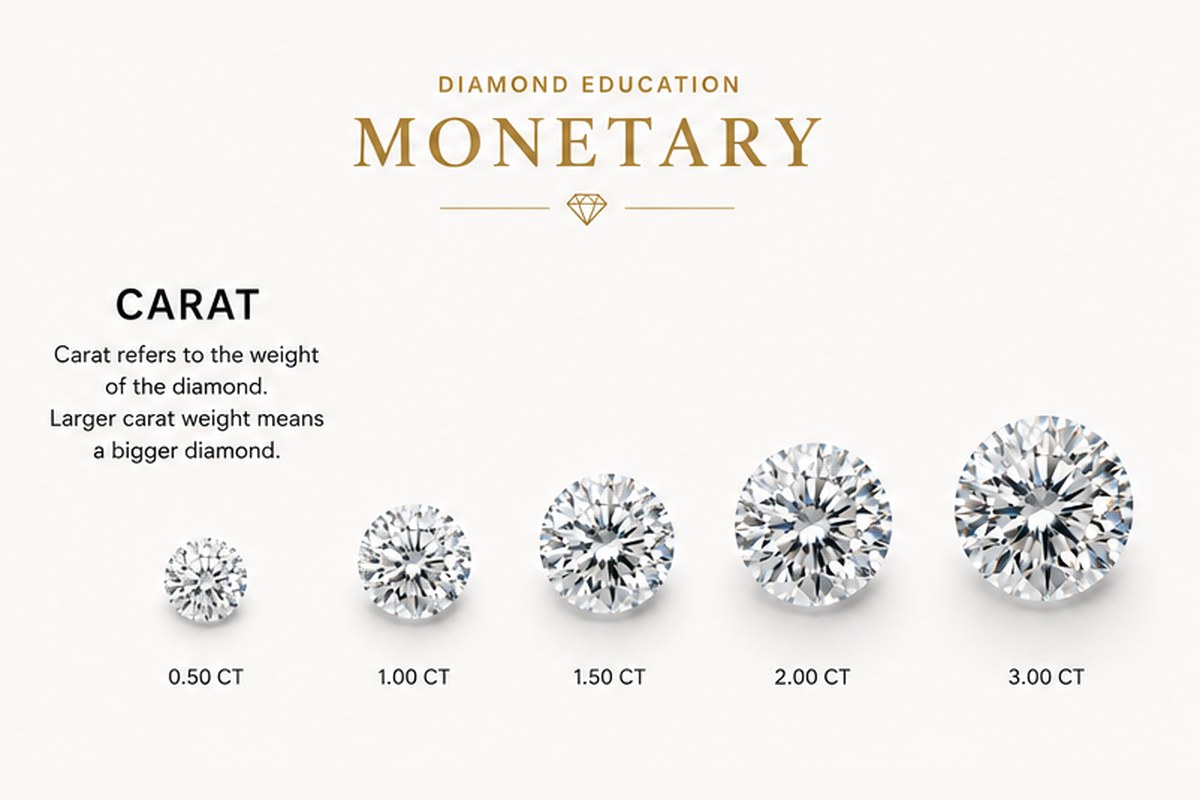
A carat is a unit of weight equal to 200 milligrams, not a measure of how big a stone looks. Two one-carat diamonds can appear different sizes depending on how the weight is distributed — a shallow stone spreads wider, a deep one hides weight underneath.
Price jumps at the round numbers. A 0.98ct and a 1.00ct look identical to the eye, but the 1.00ct costs meaningfully more because of the magic number. Buying just under a threshold — 0.90, 1.40, 1.90 — is the easiest saving available to you, and nobody will ever know.
Color
How little yellow it holds
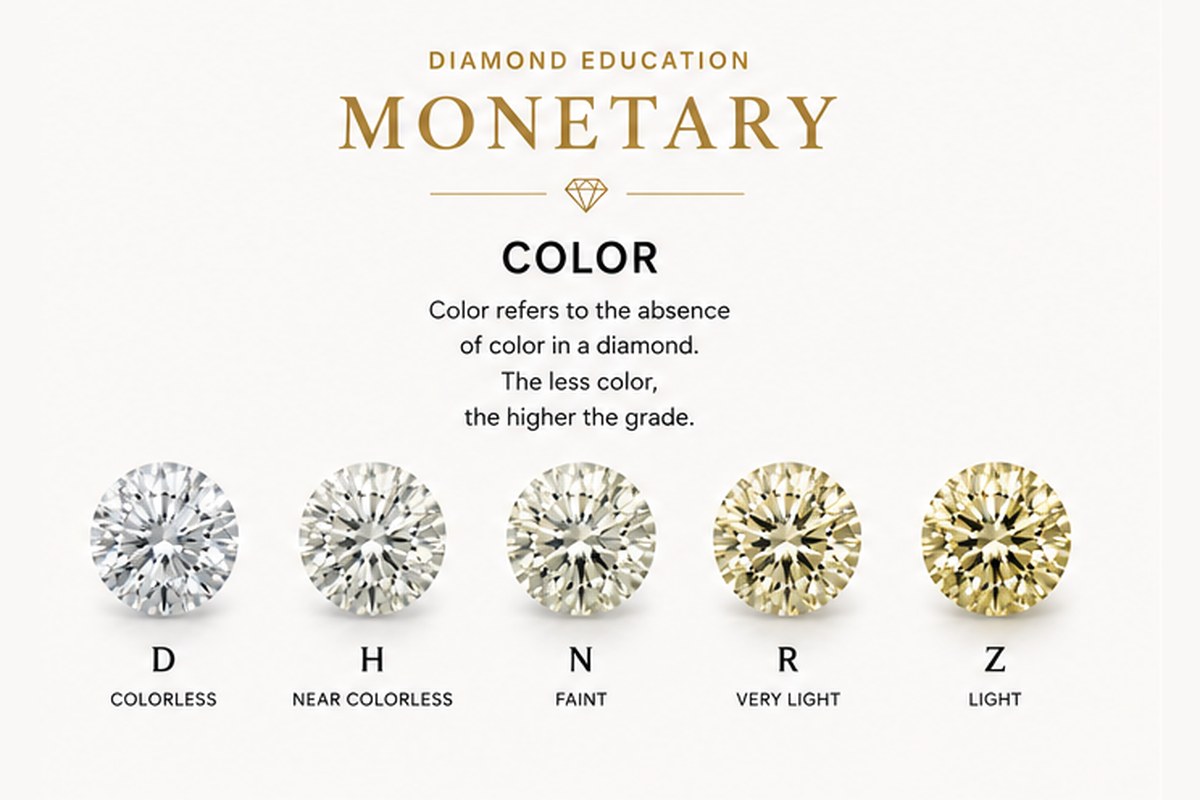
Graded D to Z. D is completely colorless; by Z there's an obvious warm tint. The difference between neighboring grades is invisible unless you're comparing stones side by side against a white card under controlled lighting.
G to I is the value zone. They face up white and cost noticeably less than D–F. And the metal matters: in yellow gold, a warmer J or K stone looks entirely at home and saves you more again. Paying for D color in a yellow gold setting is spending money nobody can see.
Clarity
The one people overpay for
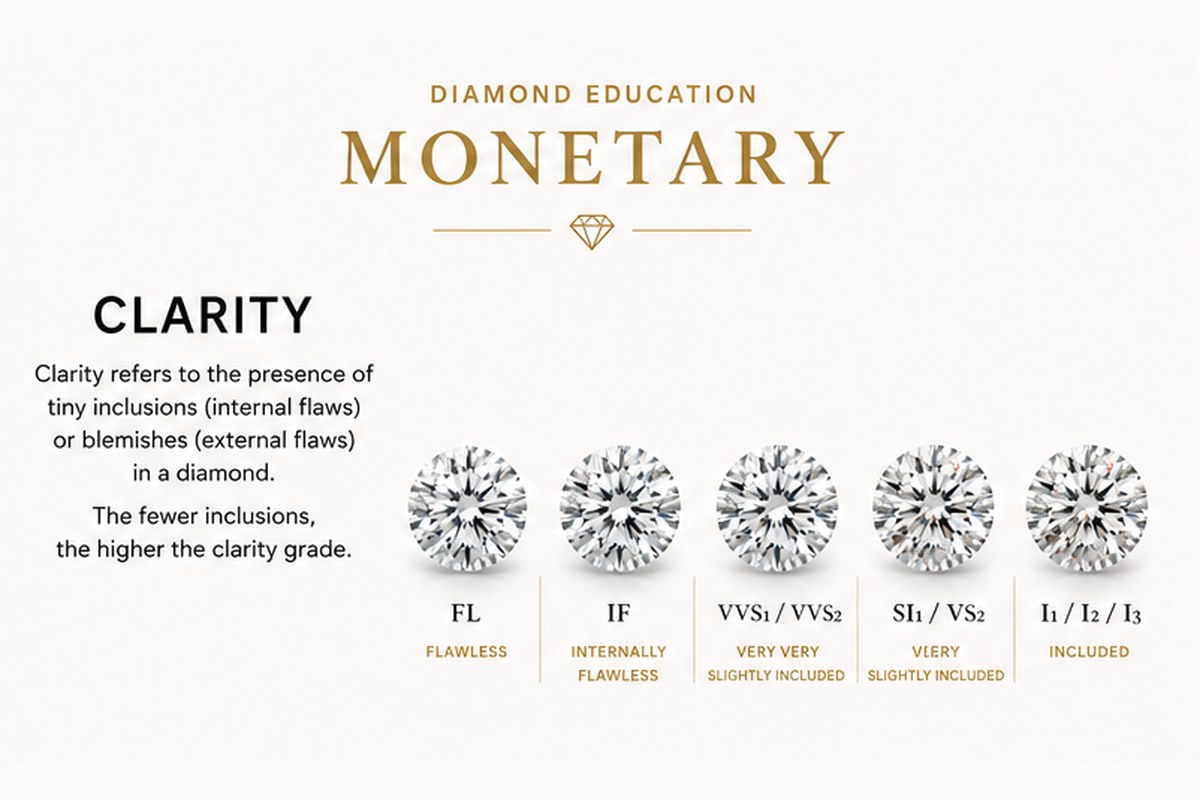
Clarity describes internal features called inclusions and surface features called blemishes. It runs from FL (Flawless) down through IF, VVS, VS, SI, to I (Included). Grading is done under 10× magnification — which is the crucial detail, because you will not view your ring under 10× magnification.
What you want is eye-clean: no inclusions visible to the naked eye at normal distance. That usually starts around VS2 or SI1, and those grades cost far less than VVS or Flawless. Above eye-clean you're paying for something only a loupe can find.
One caveat: step cuts like emerald and Asscher have large open facets that show inclusions more readily. For those shapes, move up to VS or better.
The short version: spend on cut, buy just under the carat thresholds, sit at G–I color, and go eye-clean on clarity. Do that and you'll get a visibly better diamond than someone who spread the same budget evenly across all four.
That’s the stone sorted. The setting it sits in is the other half of the look — our guide to engagement ring styles breaks down solitaire, halo, three-stone, pavé and more.
Your estimated payment
MJC Card · 34% down · 19.90% APR
Ring budget
Under $1,500 is paid in full at checkout. MJC Card financing starts at $1,500 — below that it's a straight purchase, no down payment and no interest.
Estimates for planning only. Eligibility is application-based and approval is not guaranteed.
Common questions
The quick answers most people want before they buy.
Which of the 4Cs should I spend the most on?
Cut — especially on a round diamond. It has the biggest effect on how a stone handles light, which is what you see as brightness, sparkle, and fire. A large diamond with mediocre light performance can look flatter than a smaller, well-cut one. For a round brilliant, Excellent is a strong target — but don't buy on the grade alone; the stone's actual proportions and how it performs in person matter just as much.
Where can I save money without the diamond looking worse?
Color and clarity, if you shop carefully. Most people can't tell neighboring color grades apart without holding stones side by side, so G–H gives you a beautifully white diamond for less, and I can save you more if you don't mind a touch of warmth. On clarity, don't pay up for a grade that just sounds better — an eye-clean VS2 or SI1 can look every bit as clean to the naked eye as a much higher grade. Judge the individual stone rather than assuming every SI is eye-clean.
Does a bigger carat mean a bigger-looking diamond?
Not necessarily. Carat measures weight, not size, and two stones of the same weight can look different face-up depending on their proportions and cut. Shopping just under a “magic” size — say 0.90 to 0.99 carat instead of a full 1.00 — can look virtually identical while costing noticeably less. GIA notes that a 0.99-carat diamond is hard to tell apart from a 1.00-carat by eye, even though the price difference can be real.
What does “eye-clean” mean?
It means the inclusions aren't visible to the naked eye under normal viewing — not that the diamond is flawless under magnification. Clarity grades are set by trained graders using 10× magnification, while “eye-clean” is an industry term, not an official GIA grade. For many shoppers an eye-clean VS2 or SI1 is the sweet spot of looks and value, but because inclusions differ from stone to stone, it's always better to check the individual diamond than to trust the grade alone.